
Engaged... what next?
Engaged... what next?
25/11/2024
After years of waiting, you are finally engaged, or perhaps it happened very quickly. But what now?
Organising a wedding is quite different from planning your birthday, and there is often much more to it than you might initially think.
How do you even begin?
1. When would you like to get married?
Of course, when choosing a date, year or season, you should also take into account when you were proposed to.
Please note that there is a lot to organise and that wedding suppliers often need to be booked 1 to 1.5 years in advance if you want to get married during the high season (May to September).
Do you have a specific date that is special to you and that you would like to have as your wedding day, but that falls within a year of your engagement?
Then it may be that you do not always have your first choice among suppliers.
If you are flexible and would like to get married during a specific season, a date can be chosen based on availability.
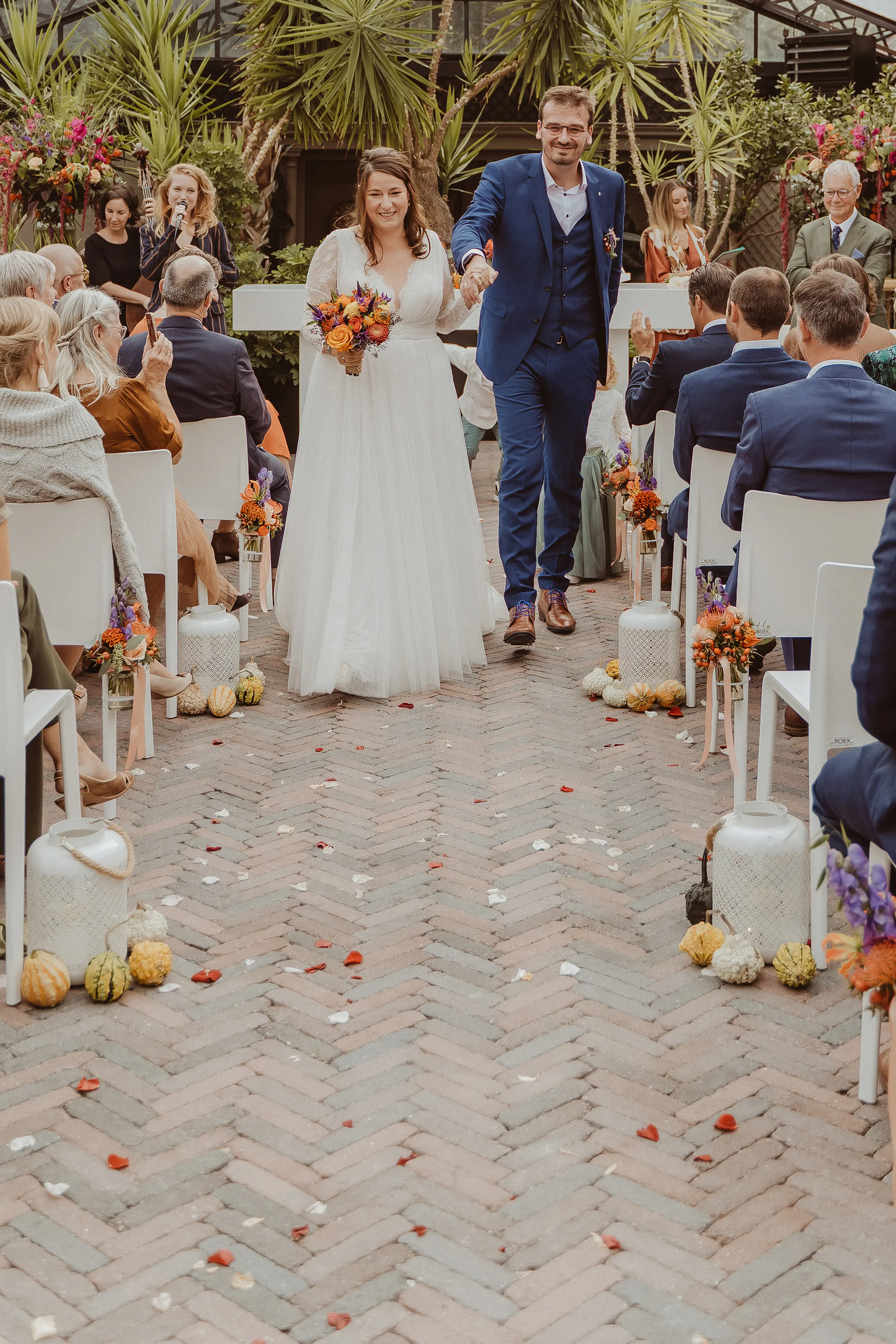
Although autumn weddings are not yet very popular and fall outside the high season, this period has a special charm. The leaves turn a beautiful orange colour, the sun is lower in the sky, the evenings come earlier, and you don’t have to worry about tropical temperatures of 30°C.
A winter wedding also has its advantages.
Although it doesn’t snow often in Belgium, there’s always a chance. Imagine a wedding photo in an enchanting snowy landscape – as if you’ve stepped straight into a fairy tale.
What’s more, our fireplace provides a warm glow and extra atmosphere.
The reason that many weddings take place between May and September is often the idea of an atmospheric outdoor ceremony. However, we have seen remarkably few outdoor celebrations over the past year due to the persistent rain. Unfortunately, even the most popular period offers no guarantee of good weather.
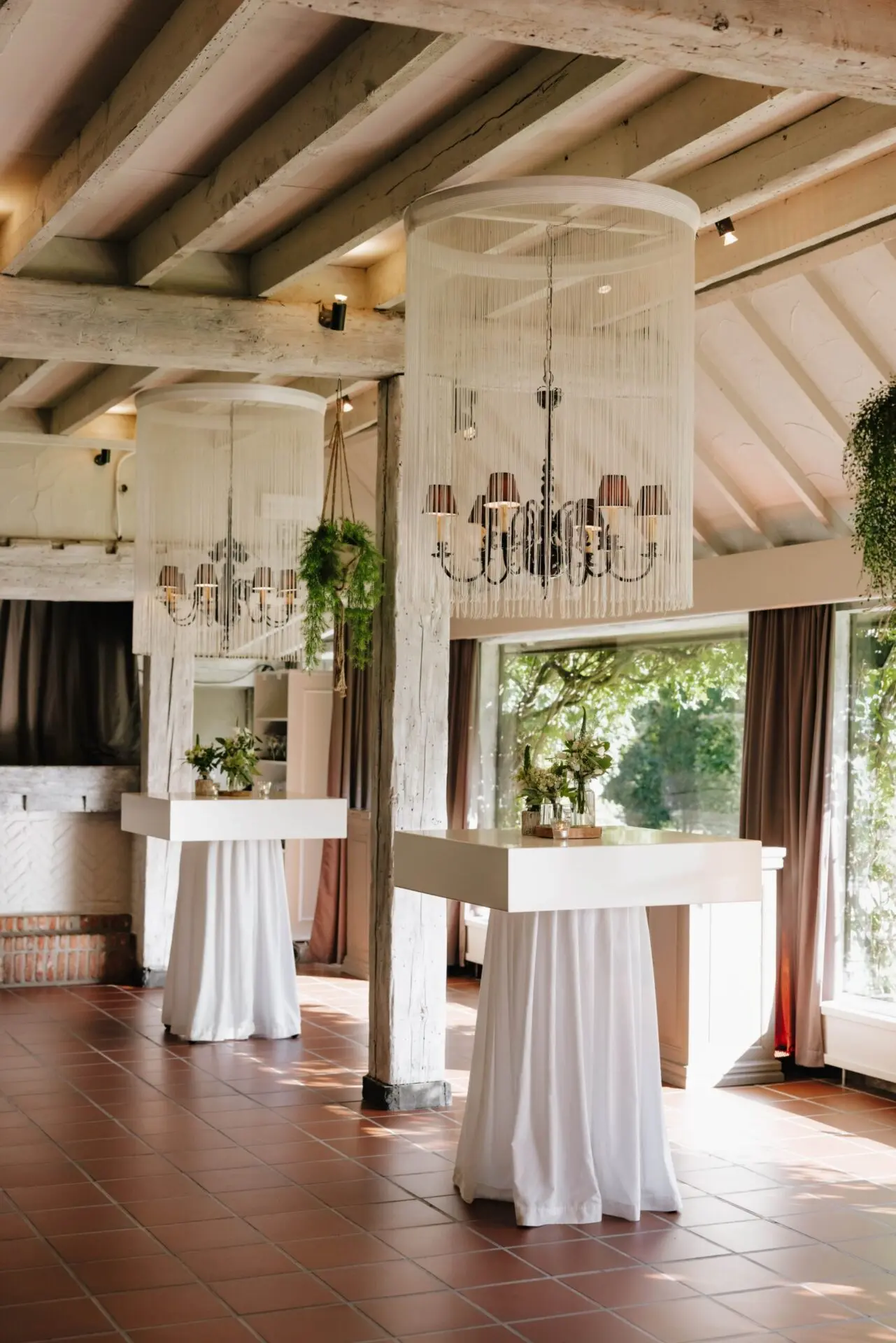
But what if, as in our orangery, there is a wonderful indoor alternative available? No sweaty guests, no risk of sunstroke, and no parasols dominating your wedding photos. Definitely worth considering, right?
2. Where would you like to get married?
Often, the search begins not too far from home and at locations that are familiar to you.
But just because something is nearby, it is not necessarily what you are looking for.
What about a scattered family?
If you come from the Kempen and your fiancé comes from the seaside, where will you look?
It is indeed very nice to get married close to home, but this is by no means a must.
Are you from a big city and would you like to get married in a quiet, green environment with plenty of parking? Then you will have to look a little further afield.
When searching for a location, it is useful to have a general idea of what you want your wedding to look like. Are you looking for a place where you can put up a marquee or a charming barn that you can decorate entirely to your liking? Or would you prefer a building, such as an authentic farmhouse or a modern function room?
There are countless possibilities, and without a clear picture, you run the risk of losing sight of the forest for the trees. Are you unsure or do you have different preferences? Then you can, of course, explore both options. However, by making choices in advance, you can rule out a large number of possibilities and make the search more manageable.
The most important thing about your location is that you fell in love with it when you saw it for the first time. That you immediately feel comfortable with the location and the people in charge.
That upon entering, you begin whispering to each other about the possibilities and can already start dreaming about your party. And that this feeling is only reinforced during your next visit.
3. Who are you going to marry?
The most important person is already known, of course, but two people are still alone.
Are you inviting the whole family?
It is often grandparents who attach great importance to this. But for the younger generation, it is no longer so important to invite your aunt’s aunt to your big day.
A principle that is often applied: if you have had little contact over the past year and/or they do not play an active role in your life, these people are often not invited.
This applies to colleagues, friends and family.
The biggest point of discussion among couples seems to be the presence of children.
If you don’t have children yourselves, it’s easier to say that the party is for adults only.
When brothers and sisters have children, it is a different story. Often, the children are invited to join until the guests get seated at the table.
That way, they can stay a little longer and the parents can join in the fun from dinner onwards.
Think carefully about their presence, because it will definitely have an impact on your party.
If you do decide to invite children to your wedding, make sure that a babysitter or children’s entertainment is available.
This will ensure that you or the children’s parents do not have too much work to do.
Would you still like to invite distant family members, business associates, colleagues, etc. to your celebration without them having to attend for the entire day?
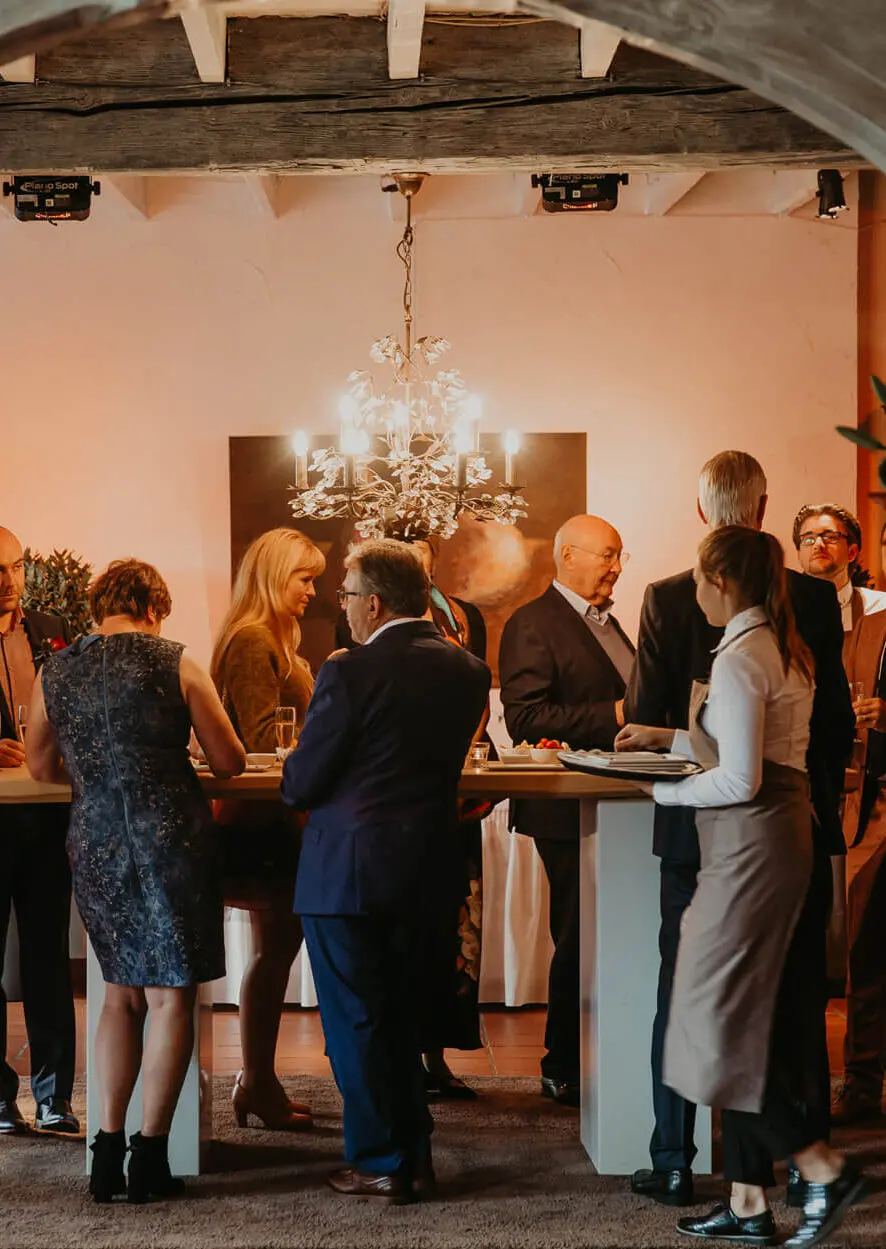
Then opt for a reception before dinner, for example. This often lasts 2 to 2.5 hours and gives you enough time to talk to everyone. This way, they can still be part of your celebration.
Another option would be to invite some of the guests to the dance party. They could join you for the dessert buffet, for example, and then get the dance party started.

4. How big is our budget?
According to Salino’s ‘The Great Wedding Survey,’ the average amount spent on a wedding reception in 2024 was €15,113.00.
The average cost per person is €141.00.
This amount naturally depends on various factors:
- The town/municipality/county of your location.
- The chosen catering package.
- The size of the guest list.
- How long the party lasts.
- …
So sit down with your parents and fiancé and draw up a realistic budget.
Taking into account the cost per supplier.
Creating a general budget can be useful, but it is of course easy to say that you want to spend €12,000 without first checking the average prices of your suppliers.
5. How do I plan my day?
Your wedding day is a very hectic and busy day.
Therefore, it is very important to organise this day optimally in order to allow for moments of rest.
First, ask yourselves whether you want the civil wedding to take place on the same day as your reception.
More and more couples are choosing to separate the two.
Are you planning to get married in a church or would you prefer a ceremony at the venue?
Are you allowed to see each other before the ceremony, or is the ‘first look’ only when you walk down the aisle?
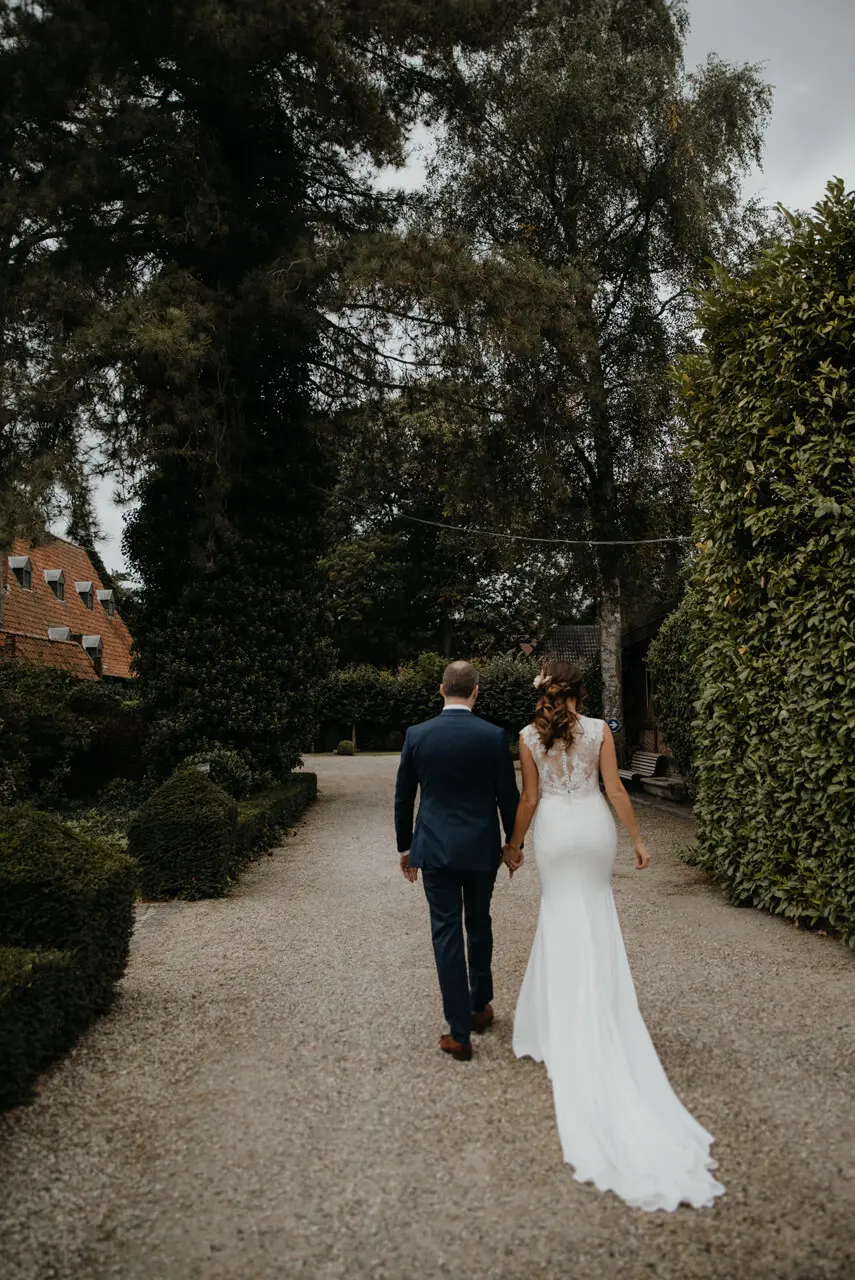
Will you take time for photos of the two of you on location, and will the photos with family and friends be taken during the aperitif, or should they also be included in the separate photo shoot?
These are all aspects to take into account when drawing up your daily schedule.
But this is also something that a master of ceremonies or venue coordinator can help with.
You should allow approximately one hour for a ceremony, although a church wedding may take a little longer.
Depending on the location where you take photos and who is with you, you can also count on approximately 2 hours for this.
The aperitif usually lasts an hour, and dinner takes approximately three hours, depending on the catering package chosen.
So make sure you allow enough time for everything.
Because if you start the festivities early, hair and make-up will be at the door even earlier.
Planning a wedding is quite an undertaking and not something that can be arranged in a flash.
But that’s also part of the fun.
Because you’re always busy with wedding-related matters, no matter how small, you’ll look forward to your big day even more.
If this seems like too much and you feel overwhelmed, seek assistance.
Consider hiring a professional wedding planner or dividing tasks between you and your fiancé.
An event venue can also help with the basics, such as the DJ, ceremony speaker, photographer, flower decorator, photo booth, etc.
They often have good contacts that they can call upon for you.
But for the details, a wedding planner or possibly a helpful witness will be no luxury.
We recommend outsourcing the day itself in any case.
Whether you choose a wedding planner, a master of ceremonies or a coordinator from the venue itself.
They will take care of everything so that you can enjoy yourselves to the fullest.
Are you ready to start planning and curious about what we can do for you?